
ABM Campaign Examples: 7 Proven B2B Campaigns That Drove Revenue
TL;DR: The best ABM campaigns share three traits: they target a focused set of accounts, they coordinate multiple channels (ads, content, outreach, direct mail), and they measure pipeline and revenue - not clicks.
This guide breaks down 7 real ABM campaign examples from B2B companies that produced measurable results, from $50M+ in pipeline to 85% lower ad spend to 2.5x shorter sales cycles. Each example includes the strategy, channels used, and outcomes so you can apply the same patterns to your own ABM program.
Part of the ABM Strategy Hub: ABM Strategy Playbook | ABM Tools Guide | Intent Data for B2B
What Makes an ABM Campaign Work?
Before the examples, here is what separates ABM campaigns that generate pipeline from those that generate reports.
Three principles of high-performing ABM campaigns:
Focused account selection. The best campaigns target 15-200 accounts, not thousands. Fewer accounts with deeper engagement beats broad targeting every time
Multi-channel coordination. One channel is marketing. Multiple channels hitting the same people at the same time is ABM. The compounding effect of ads + content + outreach is where pipeline comes from
Account-level measurement. Tracking impressions and clicks tells you about channels. Tracking account engagement, pipeline velocity, and deal size tells you about revenue
1. Hey Sid: Managed ABM for Mid-Sized B2B Companies
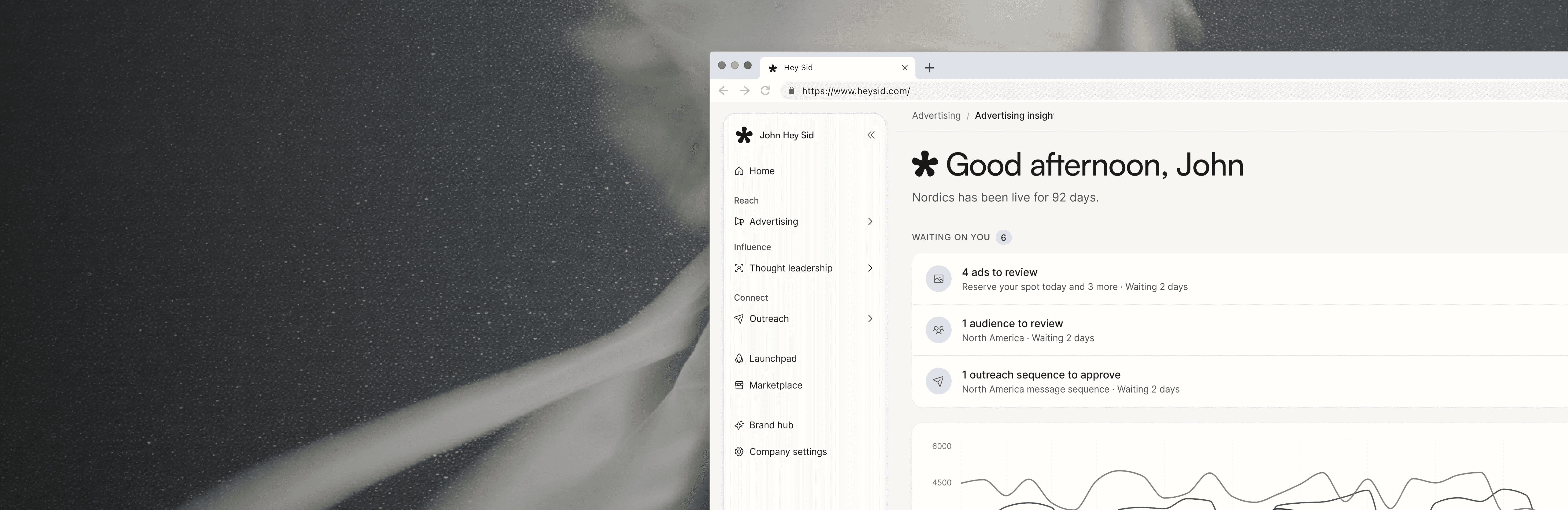
Strategy: Hey Sid runs what it calls The Influence Loop - a coordinated ABM engine that combines person-level advertising (Always On), automated LinkedIn outreach (Precision Connect), and done-for-you thought leadership (Authority Builder), all targeting the same named decision-makers at target accounts.
What makes it different: Most ABM campaigns require internal teams to manage separate ad platforms, outreach tools, and content calendars. Hey Sid manages all three as a single service, targeting specific individuals (not just companies) across LinkedIn, Meta, Google, and programmatic display.
Channels used: Person-level display ads, LinkedIn Ads, Meta Ads, Google Ads, automated LinkedIn outreach, weekly thought leadership content
Results across three customers:
Customer | Key Result | Additional Impact |
|---|---|---|
Mercuri International | 85% reduced ad spend | One of their biggest deals in a decade attributed to Hey Sid |
Devotion Ventures | 45+ qualified meetings in 4 months | Shortened sales cycles across portfolio companies |
Risk Ident | 2.5x shorter sales cycles | 40% higher engagement, fully GDPR compliant |
Why it works: The Influence Loop creates compounding familiarity. By the time Precision Connect sends a LinkedIn message, the prospect has already seen the company's ads and read their thought leadership. The outreach feels like a natural next step, not a cold interruption.
Best for: Mid-sized B2B companies (20-100 employees) with lean marketing teams and 6-18 month sales cycles.
Explore Hey Sid's ABM approach: heysid.com/how-it-works
2. Snowflake: Tiered ABM with Direct Mail and Digital
Strategy: Snowflake built a tiered ABM program combining premium direct mail with tailored digital experiences. Tier 1 accounts received custom-branded physical packages, followed by personalized display ads and coordinated SDR outreach. The program layered offline and online touchpoints to create a memorable sequence.
Channels used: Premium direct mail packages, personalized display ads, SDR outreach sequences, custom landing pages, executive events
Results: 85% open rates on direct mail. More than $50M in pipeline sourced from ABM accounts. 3x higher campaign attendance rates. 2x faster time from opportunity to close.
Why it works: Direct mail cuts through digital noise. When a decision-maker receives a physical package, followed by ads and outreach referencing the same theme, the coordinated experience builds trust faster than any single channel alone.
Key takeaway for your team: You do not need Snowflake's budget to replicate this pattern. Start with a smaller Tier 1 list (10-15 accounts) and pair targeted digital ads with a thoughtful physical touchpoint (a relevant book, industry report, or custom item). Our ABM gifting and direct mail playbook covers how to budget, time and measure those sends.
3. Cognism: ABM-Driven Growth from $2M to $13M Pipeline
Strategy: Cognism documented its own ABM journey, sharing the framework that grew their pipeline from $2M to $13M. The program combined outbound prospecting with intent-triggered campaigns, sales and marketing alignment through shared account lists, and multi-channel outreach across email, LinkedIn, and display ads.
Channels used: LinkedIn Ads, email sequences, SDR outreach, display advertising, content syndication, intent-triggered campaigns
Results: Pipeline grew from $2M to $13M. Increased win rates on ABM-targeted accounts. Shorter sales cycles for accounts that received multi-channel touches.
Why it works: Cognism treated ABM as a company-wide operating model, not a marketing side project. Sales and marketing shared the same account list, the same engagement data, and the same metrics.
Key takeaway for your team: ABM scale comes from operational alignment, not bigger budgets. Start with a shared account list and weekly sales-marketing syncs before adding channels.
4. LiveRamp: High-Touch Enterprise ABM ($50M+ from 15 Accounts)
Strategy: LiveRamp, a data connectivity SaaS company, piloted a high-touch ABM program targeting approximately 15 Fortune 500 accounts. They layered personalized display ads (using each company's name and data points), custom email sequences, physical direct mail, and coordinated sales outreach. A prospect might receive a branded infographic in the mail, then see ads reinforcing privacy and compliance themes, then get an email referencing the materials they viewed.
Channels used: Personalized display ads with company names, custom email sequences, branded direct mail, coordinated SDR outreach
Results: 33% conversion from cold target to meeting within four weeks. Multi-million dollar pipeline from just 15 accounts.
Why it works: By treating each account as its own market, LiveRamp's messaging felt bespoke rather than templated. The coordination between mail, ads, and sales created a consistent narrative that built trust with multiple stakeholders.
Key takeaway for your team: For your highest-value accounts (Tier 1), invest in personalization at the company level - reference their industry, challenges, and even recent news. Coordination matters more than creative perfection.
5. Cybersecurity SaaS: ABM That Doubled Win Rates
Strategy: A mid-market cybersecurity SaaS company (documented as an anonymized case study) implemented an ABM program targeting 200 accounts in the financial services vertical. They combined intent data from Bombora with targeted LinkedIn Ads, SDR outreach, and CISO-specific content (threat briefings and compliance guides).
Channels used: Intent-triggered LinkedIn Ads, CISO-targeted email campaigns, industry-specific webinars, SDR follow-up sequences
Results: Win rates increased from 12% to 31%. Average deal size grew 40%. Sales cycle shortened by 35%.
Why it works: Vertical focus was the differentiator. Instead of generic "cybersecurity" messaging, every touchpoint addressed financial services compliance requirements, threat landscape, and regulatory context. The content was relevant because it spoke to the buyer's specific world.
Key takeaway for your team: Industry-specific ABM outperforms horizontal ABM. If you sell into multiple verticals, run separate campaigns per vertical rather than one generic program.
6. Megadeals: Enterprise ABM Consulting Framework
Strategy: Megadeals (a European ABM consulting firm) developed a framework for complex enterprise deals where single contracts can reach seven or eight figures. Their approach focuses on mapping the full buying committee (often 10-20 stakeholders per deal), building account-specific business cases, and coordinating every touchpoint across marketing, sales, and executive engagement.
Channels used: Executive-to-executive outreach, custom business case development, account-specific presentations, multi-stakeholder relationship mapping, coordinated events
Results: Clients report shorter enterprise sales cycles and higher win rates on complex deals. The framework is used by companies selling into large enterprises where deal complexity - not volume - is the bottleneck.
Why it works: Megadeals treats ABM as a revenue strategy, not a marketing tactic. Their framework starts with the deal and works backward to the touchpoints, rather than starting with channels and hoping they add up to pipeline.
Key takeaway for your team: For large deals with 10+ stakeholders, map the buying committee first and build your ABM campaign around reaching every influencer and decision-maker - not just the primary contact. If your motion runs across many mid-sized accounts rather than a few giant ones, compare the best Megadeals alternatives for B2B ABM.
7. Influ2: Contact-Level ABM Advertising
Strategy: Influ2 pioneered contact-level advertising - showing ads to specific named individuals rather than company IP ranges. Their ABM campaigns target individual decision-makers by matching contact lists to ad platform identity graphs, then serve personalized ads to those exact people across display networks.
Channels used: Contact-level display advertising, person-based retargeting, engagement-triggered sales alerts
Results: Customers report higher engagement rates from person-targeted ads compared to IP-based account targeting. The approach eliminates wasted impressions on non-decision-makers.
Why it works: Traditional ABM advertising targets company IP addresses, which means everyone at the company sees the ad - the intern, the receptionist, the CEO. Contact-level targeting ensures only the decision-makers on your list see your ads.
Key takeaway for your team: Person-level targeting is becoming the standard for ABM advertising. Platforms like Hey Sid and Influ2 offer this capability. When evaluating ABM ad tools, ask whether they target companies or individuals. For how the two person-level options differ, see Hey Sid vs Influ2.
ABM Campaign Comparison Table
Campaign | Account Count | Channels | Key Result | Best For |
|---|---|---|---|---|
Hey Sid (managed) | 50-200+ | Ads, LinkedIn, content | 85% reduced ad spend, 2.5x shorter cycles | Mid-sized B2B, lean teams |
Snowflake (tiered) | 100-500 | Direct mail, display, SDR | $50M+ pipeline, 85% open rate | Enterprise with direct mail budget |
Cognism (growth) | 200-500 | LinkedIn, email, display | $2M to $13M pipeline | Growth-stage B2B |
LiveRamp (high-touch) | 15 | Personalized display, mail, SDR | 33% cold-to-meeting in 4 weeks | Enterprise, Fortune 500 targets |
Cybersecurity SaaS | 200 | Intent-triggered ads, email | Win rate 12% to 31% | Vertical-focused mid-market |
Megadeals (consulting) | 5-15 | Executive outreach, custom cases | Shortened enterprise cycles | Complex 7-8 figure deals |
Influ2 (contact-level) | 100-1,000+ | Contact-level display ads | Higher engagement per impression | Teams wanting person-level ads |
How to Apply These ABM Campaign Patterns
You do not need Snowflake's budget or LiveRamp's brand to run effective ABM campaigns. The patterns that work across all seven examples:
Start with a focused account list - even 50 accounts is enough
Coordinate at least three channels - ads + outreach + content is the minimum effective stack
Target individuals, not just companies - person-level ads and personalized outreach outperform company-level blasts
Measure account engagement, not leads - track which accounts are warming up, not how many forms were filled
Give it 60-90 days - ABM compounds over time. The first 30 days build awareness, the next 30 drive engagement, the final 30 create pipeline
For mid-sized B2B companies that want these patterns without the operational complexity, Hey Sid runs managed ABM campaigns covering advertising, outreach, and content in one coordinated service.
Book a demo: heysid.com/demo
FAQ
What is the best ABM campaign for small marketing teams?
Managed ABM services like Hey Sid are built for teams of 1-3 marketers. Hey Sid handles person-level advertising, LinkedIn outreach, and thought leadership content - the three core ABM channels - as a managed service. This gives small teams enterprise-level ABM execution without managing separate tools.
How many accounts should an ABM campaign target?
High-touch campaigns (like LiveRamp) work with 10-25 accounts. Growth campaigns (like Cognism) work with 100-500. Scaled campaigns can target 500-1,000+. The right number depends on your team's capacity and whether you are using managed execution or running campaigns in-house.
What channels work best for ABM campaigns?
Multi-channel campaigns across 4+ touchpoints perform best. The most common high-performing combination is: person-level display ads + LinkedIn outreach + email sequences + thought leadership content. Adding direct mail for Tier 1 accounts further increases engagement.
How do I measure ABM campaign success?
Track account engagement scores (weekly), pipeline influenced (monthly), and win rates and revenue (quarterly). Avoid measuring ABM by lead volume. Compare win rates and deal sizes for ABM-targeted accounts vs. non-ABM accounts.
Sources
ZenABM, "Top 11+ ABM Marketing Examples: Steal-Worthy Real Campaigns"
RevvGrowth, "5 ABM Examples Shaping B2B Marketing Success in 2025"
AdRoll, "17 ABM Stats That Will Make You Rethink Your 2026 Strategy"
42DM, "ABM Marketing Campaigns That Work: Step-by-Step Guide"
TheCMO, "15 ABM Best Practices to Follow in 2026"
Warmly, "8 Account-Based Marketing Examples in 2026"
Hey Sid, "How It Works" (heysid.com/how-it-works)
Hey Sid, "Case Studies" (heysid.com/case)
ABM Hub: ABM Strategy Playbook | ABM Tools | Intent Data Guide | Resources