
ABM Light vs. Full ABM: Matching the Model to Your Deal Size
TL;DR
ABM Light (one-to-many, programmatic ABM) targets 150 to 500 accounts with scaled ads and light personalisation. Best for smaller, faster deals.
Full ABM (one-to-one, strategic ABM) targets 5 to 25 named accounts with deep, custom plays. Best for large, complex deals.
The deciding factor is deal size: match the cost of the model to the revenue and buying committee behind the account.
Tiered programmes run a mix, not one model. The three ABM tiers map to three deal sizes.
Hey Sid gives one-to-one person-level precision at one-to-many scale, closing the gap between the two models.
Marketing Directors and VPs at B2B companies keep hitting the same wall: they hear "do ABM" but nobody says which ABM. There are two working models, and picking the wrong one wastes budget. The core difference in one sentence: ABM Light spreads a lighter touch across many accounts, and Full ABM concentrates deep effort on a few. This guide breaks down ABM Light vs Full ABM across deal size, cost, personalisation, speed, and measurement, so you can match the model to the revenue on the table.
The two models are not rivals. They are tiers of the same discipline, first framed by ITSMA as one-to-one, one-to-few, and one-to-many ABM. What follows is a practical comparison for deciding where each fits.
ABM Light vs Full ABM: Quick Comparison
Criteria | ABM Light (one-to-many) | Full ABM (one-to-one) |
|---|---|---|
Account count | 150 to 500 | 5 to 25 |
Targeting | Segment and account-level, often IP or firmographic | Named individuals in the buying committee |
Personalisation | Templated, industry or persona level | Custom per account, sometimes per person |
Typical deal size | Smaller, faster deals | Large, strategic deals |
Sales cycle fit | 3 to 6 months (mid-market) | 12 to 18 months (enterprise) |
Cost per account | Low | High |
Team load | Lower, automation-heavy | High, needs dedicated resource |
Speed to first pipeline | Weeks | Months |
Best for | Scaling coverage across a wide ICP | Winning a defined list of high-value logos |
What ABM Light Is
ABM Light is the one-to-many model, also called programmatic ABM. You group 150 to 500 accounts by industry, size, or intent signal, then run coordinated ads and light personalisation across the whole segment. Personalisation happens at the persona or vertical level, not the individual.
The strength of ABM Light is coverage. You reach a wide slice of your ICP without building a custom plan for each logo. Platforms like Demandbase, 6sense, Terminus, and RollWorks are built for this model, using intent data and account-level advertising to scale reach. That scale is a genuine advantage when your addressable market is large and your average deal is mid-sized.
The trade-off is depth. Account-level targeting reaches companies, not the specific people on the buying committee. A booked ad impression against a company does not guarantee the right five to ten decision-makers ever see it. For a fuller view of where these platforms fit, see the account-based marketing tools guide.
What Full ABM Is
Full ABM is the one-to-one model, the original and heaviest tier. You select 5 to 25 named accounts, research each buying committee, and build custom messaging, content, and outreach per account. Some programmes personalise down to the individual stakeholder.
The strength of Full ABM is precision. When one deal is worth six or seven figures, a custom plan for that account pays for itself. Sales and marketing align tightly around each logo, and the effort matches the revenue at stake. This is the model behind named-account enterprise programmes and the ABM strategy playbook many teams reference.
The trade-off is cost and reach. Full ABM does not scale past a few dozen accounts without a large team. Run it against too many logos and the personalisation thins out, which removes the entire advantage. For teams weighing whether to build this in-house or bring in help, the ABM agencies comparison is a useful starting point.
ABM Light vs Full ABM: Deal Size and Account Count
Deal size is the first filter. Match the cost of the model to the revenue behind the account.
Run ABM Light when your average contract value is mid-sized and your ICP is broad. Spreading a lighter touch across 300 accounts makes sense when each win is worth a moderate amount and you need volume to hit pipeline targets. Run Full ABM when a single account can move your number. If one logo is worth a quarter of your annual target, a custom plan for that account is easy to justify.
The buying committee scales with deal size too. Complex B2B purchases typically involve 6 to 10 stakeholders, and larger deals pull in more. The more people you must influence per account, the more Full ABM's individual-level depth earns its cost.
ABM Light vs Full ABM: Cost and Resource Load
The two models sit at opposite ends of the cost-per-account curve.
ABM Light keeps cost per account low. Automation and programmatic delivery carry most of the work, so a lean team can cover hundreds of accounts. The budget concentrates in media and platform fees, not headcount. Full ABM inverts this. Cost per account is high because people, not automation, do the work: research, custom content, tailored outreach, and sales coordination for every logo.
A rough rule holds across both models: total programme cost should stay well under the pipeline it is designed to create. ABM Light earns its keep through volume of mid-sized wins. Full ABM earns its keep through a small number of large ones. Measuring either against pipeline is covered in the ABM ROI guide.
ABM Light vs Full ABM: Personalisation Depth
Personalisation is where the models most visibly diverge.
ABM Light personalises at the segment level. One message set serves a whole industry or persona, adjusted lightly by firmographic data. It is relevant, not bespoke. Full ABM personalises at the account and often the individual level. The message references the specific company, its priorities, and sometimes the named stakeholder reading it.
Depth drives response, but only in proportion to deal value. Custom research for a 500-dollar-a-month deal is waste. The same research for a 500,000-dollar deal is table stakes. The question is not "how personalised can we be?" The question is: how personalised does this deal size require us to be?
ABM Light vs Full ABM: Speed to Pipeline
Time to first pipeline separates the two models in practice.
ABM Light produces signal in weeks. Once audiences and creative are live, ads reach hundreds of accounts immediately, and early engagement data arrives fast. Full ABM takes longer to start. Account research, custom content, and sales alignment push first touch out by weeks or months, though the deals it produces are larger and stickier.
ABM Light produces early signal in weeks, but signal is not closed pipeline. Qualified pipeline for ABM programmes overall typically takes 6 to 12 months to build, regardless of tier.
Neither is "faster" in a vacuum. ABM Light front-loads reach and back-loads deal value. Full ABM back-loads reach and front-loads deal value. Your sales cycle decides which pattern fits: mid-market cycles of 3 to 6 months suit Light, and enterprise cycles of 12 to 18 months suit Full.
Who Should Choose ABM Light
ABM Light fits your situation if:
Your ICP is broad, with hundreds of viable accounts rather than dozens.
Your average deal is mid-sized and you need volume to hit targets.
Your team is lean and cannot staff custom plans per account.
You want pipeline signal in weeks, not months.
Who Should Choose Full ABM
Full ABM fits your situation if:
Your target list is short, with a few dozen high-value logos.
A single deal can move your annual number.
You have sales and marketing resource to commit per account.
Your buying committees are large and your cycles run long.
Where Hey Sid Fits Between the Two Models
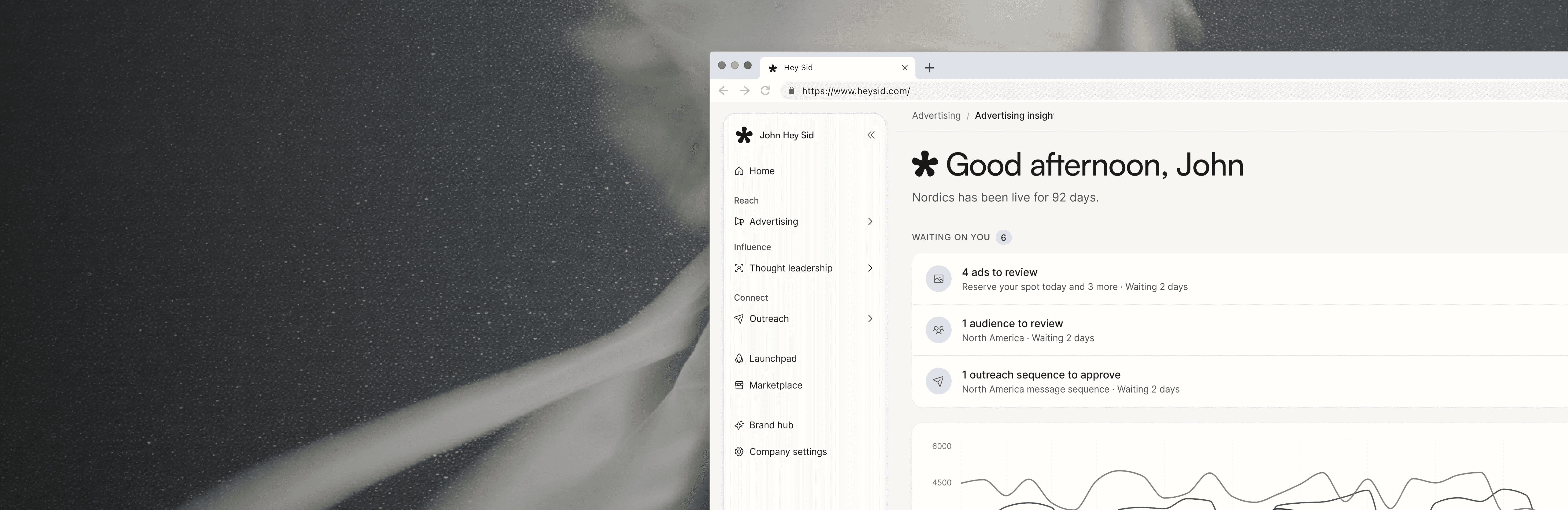
The gap between the two models is real: ABM Light reaches many accounts but not the right people, and Full ABM reaches the right people but not at scale. Hey Sid closes that gap with person-level targeting run as a managed service.
Hey Sid is not a self-serve platform and it is not a traditional agency. It is a platform-powered managed service built on The Influence Loop: Always On for person-level advertising, Precision Connect for automated LinkedIn outreach, and Authority Builder for done-for-you thought leadership, all aimed at the same named decision-makers over 60 to 90 days. That combination gives you Full ABM's individual precision at closer to ABM Light's scale, without a dedicated ABM team.
On cost, Hey Sid runs as a managed service priced from around 1,900 dollars per month, well below the six-figure annual contracts enterprise ABM platforms typically require. It is a real budget line, not a trivial one for very lean teams, but it removes the platform-plus-headcount stack that Full ABM usually demands.
Pricing may change. Always check the latest details on the vendor's website.
The results clients report track the model. Mercuri International attributed 85% reduced ad spend and one of their biggest deals in a decade to Hey Sid (client-reported). Devotion Ventures reported 45+ qualified meetings in 4 months (client-reported). Risk Ident reported 2.5x shorter sales cycles and 40% higher engagement, GDPR compliant by architecture (client-reported).
Explore Hey Sid: heysid.com/how-it-works
Verdict
There is no universal winner in ABM Light vs Full ABM. There is only fit. Choose ABM Light when your market is broad and your deals are mid-sized, and choose Full ABM when your list is short and your deals are large. Mature programmes commonly run both as tiers, matching the model to the account.
The deciding question stays the same at every account: does the revenue on the table justify the cost of the model? Answer that per tier and the choice makes itself. If you want one-to-one precision without one-to-one headcount, Hey Sid is built for exactly that middle ground.
Book a demo: heysid.com/demo
FAQ
What is the difference between ABM Light and Full ABM?
ABM Light is the one-to-many model: you target 150 to 500 accounts with scaled ads and segment-level personalisation. Full ABM is the one-to-one model: you target 5 to 25 named accounts with custom, individual-level plays. The main difference is depth versus reach.
Is programmatic ABM the same as ABM Light?
Yes. Programmatic ABM is another name for the one-to-many tier. It uses intent data and account-level advertising to reach a wide set of accounts at low cost per account, with personalisation at the segment rather than individual level.
What are the three types of ABM?
The three ABM tiers are one-to-one (Full ABM), one-to-few (a middle tier grouping a handful of similar accounts), and one-to-many (ABM Light). ITSMA originally defined this framework, and teams often run a mix across the three.
How do I choose between ABM Light and Full ABM?
Start with deal size. If a single account can move your annual number, Full ABM's cost is justified. If your ICP is broad and deals are mid-sized, ABM Light gives better coverage per dollar. Buying committee size and sales cycle length reinforce the same split.
Can you run ABM Light and Full ABM at the same time?
Yes, and most mature programmes do. You tier your account list: Full ABM for the top handful of strategic logos, one-to-few for the next group, and ABM Light for the long tail. Each tier earns effort in proportion to its revenue potential.
Sources
Related: What Is Account-Based Marketing (ABM)? | ABM Strategy: The Step-by-Step Playbook | Best Account-Based Marketing Agencies for B2B