Rikard Jonsson
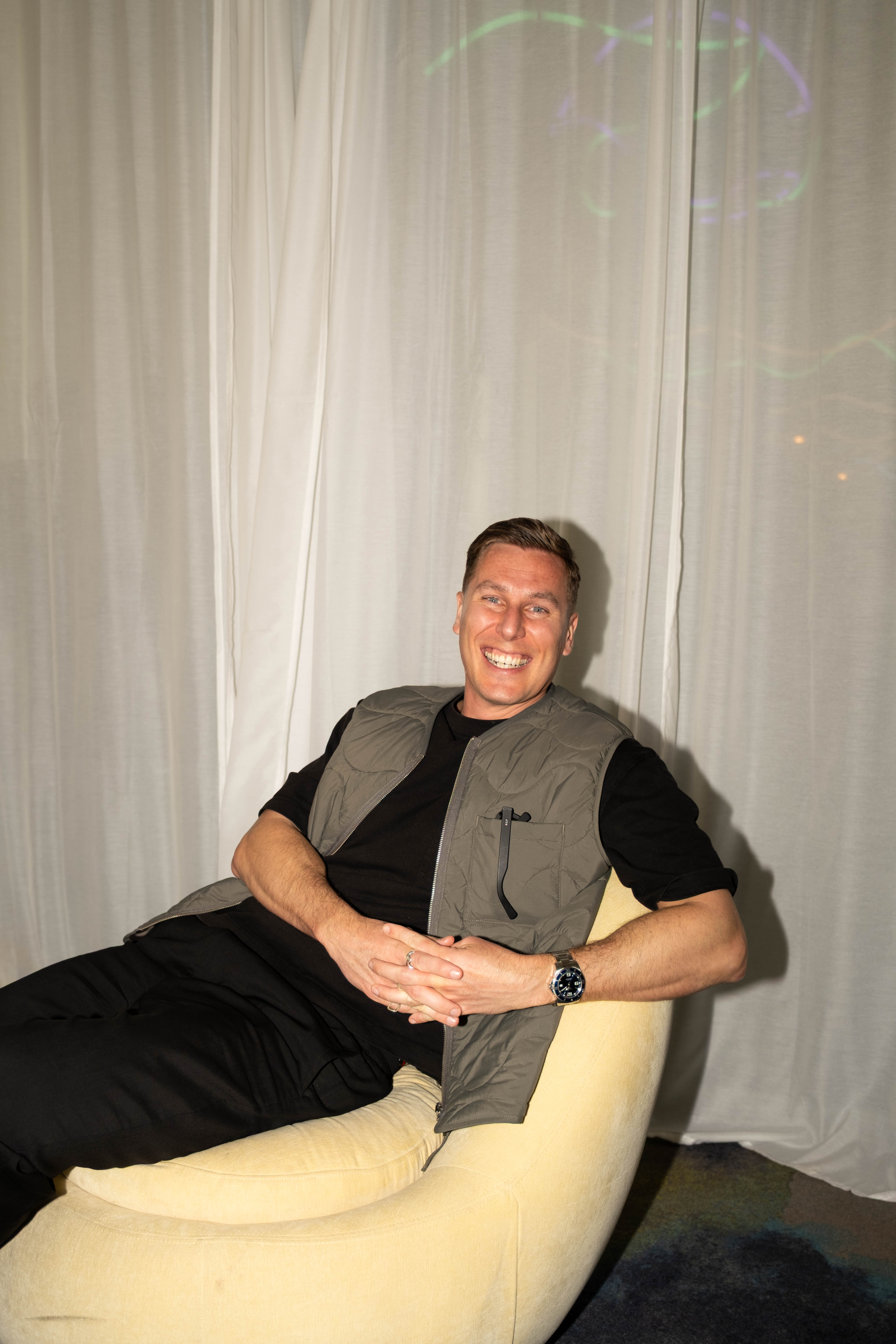
Rikard Jonsson is Founder & CEO of Hey Sid and a five-time entrepreneur with a background in B2B SaaS, sales, and brand building. He believes B2B marketing is overcomplicated and writes about going back to basics: visibility, positioning, and consistent presence among the accounts that matter.
The B2B Dark Funnel: How to See What CRMs Cannot in 2026
TL;DR
The dark funnel is all the B2B buyer activity that happens before any form fill - peer conversations, Slack DMs, anonymous research, AI assistant queries, and review-site visits. 70-80% of the B2B buyer journey now happens in dark funnel channels invisible to standard CRMs and analytics. Direct traffic for leading B2B SaaS brands runs 64-72% (Gong 72.1%, HubSpot 71.6%, Outreach 71.1%). This guide covers the framework, how to measure what cannot be tracked, and how mid-sized B2B teams adapt.
What Is the Dark Funnel?
The dark funnel is the portion of the B2B buyer journey that occurs in channels marketing analytics cannot track. This includes private conversations in Slack and Teams, DMs on LinkedIn and other social platforms, closed community groups, word-of-mouth recommendations, podcast mentions, AI assistant queries, and anonymous research on review sites.
The term emerged from B2B revenue teams recognising that significant buying activity happened before any trackable engagement. Buyers visited websites anonymously, read competitor content, consulted peers, consumed review site content, and shortlisted vendors - all without producing any CRM signal. Modern attribution credits the demo form. The dark funnel built the decision.
Three layers make up the modern dark funnel:
Dark social - link sharing through private channels (Slack, Teams, WhatsApp, DMs) that shows up as "direct traffic"
Peer and community influence - LinkedIn posts, Reddit threads, Slack communities, industry conversations
AI dark funnel - emerged in 2024-2026, where buyers ask ChatGPT, Claude, Perplexity for vendor recommendations and receive answers without clicking any links
The AI dark funnel is the newest layer and the most consequential. 94% of B2B buyers now use LLMs during purchase research. When an AI assistant recommends a brand, the buyer typically searches the brand directly afterward - appearing in analytics as "Direct" or "Brand Search" with zero credit to the AI that influenced the decision.
Why Dark Funnel Activity Matters in 2026
The numbers are unambiguous
The scale of dark funnel activity is now documented across multiple studies:
70-80% of the B2B buyer journey happens in untrackable channels (Forrester, Gartner 2026)
100% of traffic from Slack, Discord, WhatsApp is misattributed as direct in standard analytics (SparkToro)
B2B SaaS leaders show 64-72% direct traffic - Gong 72.1%, HubSpot 71.6%, Outreach 71.1%, Salesforce 64.5%
Average B2B journey: 211 days, 76 touchpoints - standard attribution captures 5-10 of those touchpoints
Buyers spend only 17% of journey talking to vendors - the other 83% is self-directed research, peer conversations, and AI
Standard attribution structurally undercounts marketing
When CRM-attributable touchpoints represent 25-30% of the actual journey, attribution models built on those touchpoints undercredit marketing by 70-75%. The CFO asks "what is marketing's contribution this quarter?" Marketing has a number. The number is wrong by an order of magnitude.
The AI dark funnel is the biggest 2026 shift
40% of B2B buyers now research through ChatGPT, Perplexity, and AI Overviews. When ChatGPT recommends a vendor, that recommendation has zero observable touchpoint trail. The buyer searches the brand, lands via "Direct," and converts. AI gets zero credit; brand search gets credit it did not earn.
This matters because the brands cited by AI assistants for category queries (e.g., "best ABM platform for European B2B") are taking unrecognised pipeline share. The brands not cited are losing it without knowing why.
Mid-sized B2B feels the impact most
For 20-100 employee B2B teams with marketing functions of 1-3 people, dark funnel invisibility has two compounding effects: marketing's budget gets cut on incomplete data, and the team spends time optimising what they can measure rather than what produces pipeline. The teams winning have stopped trying to track everything and started measuring influence through proxies.
The Dark Funnel Framework
Four components, each requiring different measurement approaches.
Component 1: Dark social
Link sharing through private channels - the most documented and stable dark funnel layer.
Slack and Teams DMs sharing blog posts, articles, and resources
WhatsApp and SMS for peer recommendations
LinkedIn DMs sharing posts and articles
Closed Discord and Slack communities circulating content
Measurable signal: direct traffic with high engagement depth and conversion rate. Direct traffic from dark social often outperforms attributed traffic on engagement metrics.
Component 2: AI dark funnel
The 2024-2026 layer that has reshaped the dark funnel category.
ChatGPT, Claude, Perplexity answering category questions
AI Overviews in Google Search providing zero-click responses
Embedded AI assistants in productivity tools (Microsoft 365 Copilot, Google Workspace Gemini, Notion AI)
Measurable signal: brand search volume growth, queries appearing in Google Search Console for category-adjacent terms.
Component 3: Peer and community influence
The original dark funnel layer; still the largest in many B2B SaaS categories.
LinkedIn posts and comments about category topics
Reddit threads in industry subreddits
Slack communities (Pavilion, RevGenius, Demand Curve)
Twitter / X threads in B2B SaaS conversations
Substack newsletters in category niches
Measurable signal: self-reported attribution on demo forms ("How did you hear about us?"), brand mentions tracked via Brand24 or similar.
Component 4: Anonymous research
Buyer activity that happens on tracked platforms but does not identify the buyer.
Anonymous website visits before any form fill
Review site activity on G2, Capterra, TrustRadius
Industry analyst content consumption (Gartner, Forrester reports)
Podcast listens and YouTube views without engagement
Measurable signal: visitor identification platforms (Leadfeeder, Albacross, RB2B), G2 Buyer Intent, intent data feeds (Bombora, 6sense).
For the attribution framework that incorporates dark funnel signals, see our ABM Attribution guide. For the related attribution software landscape, see our Marketing Attribution Software listicle. For the account-based execution that operates in dark funnel channels, see our Account-Based Selling playbook.
How to Measure What You Cannot Track
Five methods produce defensible dark funnel measurement. No single method gives full visibility; combined, they close the 70% gap.
Method 1: Self-reported attribution
The single most actionable dark funnel measurement method.
"How did you hear about us?" field on every demo and trial form
Structured drop-down with 8-12 options, including "Word of mouth," "LinkedIn post," "AI assistant (ChatGPT, etc.)," "Podcast," "Review site"
Free-text "Other" field captures emerging channels
Quarterly review of self-reported sources vs CRM-attributed sources
The data is imperfect but directional. A 20% gap between CRM attribution and self-reported attribution to a channel typically reflects real dark funnel activity.
Method 2: Brand search volume tracking
Brand search volume is the best proxy metric for dark funnel activity in 2026.
Google Search Console for branded queries growth
Branded vs non-branded query mix as an indicator of brand-led demand
Correlation with content and paid investment quarter over quarter
AI assistant visibility tracking - whether your brand appears in LLM outputs for category queries
When dark funnel activity grows, brand searches grow. The lag is typically 30-90 days from impression to search.
Method 3: Direct traffic quality analysis
Direct traffic is most of the dark funnel showing up in analytics.
Engagement depth from direct visitors - pages per session, time on site, conversion rate
Geographic distribution that maps to your ICP
Landing page patterns - direct visitors arriving on deep pages (not homepage) often arrived via shared links from dark social
Direct traffic as % of total - growth indicates dark funnel strength
Method 4: Win/loss customer interviews
Structured post-deal questions reveal influence sources standard attribution misses.
"What sources influenced your decision?" with prompts for podcasts, peer recommendations, AI assistants
"Who else did you evaluate?" - reveals competitive shortlists
"How did our brand first come on your radar?" - captures the earliest dark funnel touchpoint
Quarterly aggregation to identify patterns across deals
Method 5: AI visibility monitoring
The newest method, addressing the AI dark funnel directly.
Test queries in ChatGPT, Claude, Perplexity for category questions ("best ABM platform for mid-sized B2B")
Track whether your brand appears in AI assistant outputs
Monitor competitor visibility in the same query set
Tools emerging in 2026 - early-stage platforms tracking brand citations in LLM outputs
Tools and Platforms for Dark Funnel Measurement
The category splits into four functional layers.
Intent data and signal feeds
6sense - intent data, predictive analytics, account orchestration
Demandbase - account-based intent and engagement
Bombora - third-party intent data feed
G2 Buyer Intent - category-level review platform intent
Visitor identification
Leadfeeder - company-level visitor ID, global coverage
Albacross - European visitor ID with GDPR-first design
RB2B - US person-level visitor ID
Clearbit (HubSpot Breeze Intelligence) - HubSpot-native enrichment
Attribution and measurement
Dreamdata - B2B journey attribution
Factors.ai - attribution plus visitor identification
HockeyStack - GTM analytics plus revenue attribution
Coordinated execution that operates in the dark funnel
Hey Sid runs across dark funnel channels rather than trying to measure them after the fact. Person-based ads (Always On) reach named individuals across LinkedIn, Meta, and Google before any form fill. Ghostwritten thought leadership (Authority Builder) appears in LinkedIn feeds and gets shared in dark social channels. Automated outreach (Precision Connect) follows after buyers have seen 3-7 brand impressions. The structural advantage: when the same buyers see your ads, read your content, and accept your connection requests, the dark funnel activity flows into the CRM as engagement intelligence on named accounts. Mercuri International cut ad spend 85% while closing one of their biggest deals in a decade with this model. Devotion Ventures booked 45+ qualified meetings in four months.
See how Hey Sid surfaces dark funnel engagement at the account level: How it works | Book a demo
Comparison: Dark Funnel Tooling
Tool | Layer | Best for | Pricing |
|---|---|---|---|
6sense / Demandbase | Intent + ABM orchestration | Enterprise with RevOps | High, sales-led |
Bombora | Third-party intent feed | Mid-market and enterprise | Tiered |
G2 Buyer Intent | Category review intent | B2B SaaS in review-driven categories | Tiered |
Leadfeeder / Albacross | Company-level visitor ID | Inbound-heavy B2B | EUR 79-EUR 399+/mo |
RB2B | US person-level visitor ID | US-focused B2B | $0-$149/mo |
Dreamdata / Factors.ai | Multi-touch + dark funnel correlation | Mid-market and growth-stage | Free to $750+/mo |
Hey Sid | Coordinated execution operating in dark funnel | Mid-sized B2B (20-100 employees) | Subscription + service |
Common Mistakes to Avoid
Trying to track everything. The dark funnel is structurally untrackable. The discipline is measurement through proxies and correlation, not direct attribution.
Cutting brand investment because attribution is incomplete. Brand-led demand shows up as direct traffic and brand search - both of which standard attribution undercounts. Cutting brand spend kills the inputs to the dark funnel and breaks the demand engine 6-12 months later.
Ignoring AI visibility. 40% of B2B buyers research through AI assistants. Brands not visible in LLM outputs for category queries lose pipeline share weekly without knowing why.
Treating "direct traffic" as untracked junk. For B2B SaaS leaders, 64-72% of traffic is direct. Engagement depth from direct visitors often exceeds attributed visitors. Direct is signal, not noise.
Skipping self-reported attribution. A drop-down on demo forms takes 30 minutes to add and produces the single most actionable dark funnel data available.
Measuring without changing budget allocation. If dark funnel data does not change content investment, brand spend, and channel mix, the measurement is reporting theatre.
Confusing dark social with dark funnel. Dark social is one component (private link sharing). The dark funnel includes peer influence, anonymous research, and the AI dark funnel - each requiring different measurement.
Conclusion and Next Steps
The B2B dark funnel is not a measurement problem to be solved. It is an operating reality to be acknowledged and worked around. 70-80% of the buyer journey happens in channels CRMs cannot see, and the AI dark funnel is making the gap larger every quarter, not smaller.
Three takeaways:
Measure through proxies, not direct attribution. Brand search volume, direct traffic quality, self-reported attribution, and win/loss interviews close the 70% gap.
Operate in the dark funnel, not just measure it. Coordinated multi-channel execution puts your brand in front of buyers during the 83% of journey they spend away from your sales team.
Invest in AI visibility now. The brands cited by AI assistants for category queries take unrecognised pipeline share. The brands not cited lose it.
For coordinated B2B execution that operates in dark funnel channels rather than trying to track them, Hey Sid combines person-based ads, ghostwritten content, and automated outreach into one motion. Book a demo to see how the Influence Loop surfaces dark funnel engagement at the account level. Or explore the resources library for more on B2B attribution and measurement.
FAQ
What is the difference between dark social and dark funnel?
Dark social refers specifically to link sharing via private messaging - Slack DMs, WhatsApp, LinkedIn DMs. The dark funnel is the broader concept, including dark social plus peer recommendations, podcast mentions, AI assistant queries, anonymous research, and any influence happening in non-trackable channels.
How much of B2B pipeline actually comes from the dark funnel?
Estimates range from 50-80% depending on category and methodology. Forrester and Gartner 2026 data points to 70-80% of the B2B buyer journey occurring in dark funnel channels. For B2B SaaS leaders, direct traffic (the best proxy for dark social) accounts for 64-72% of total traffic - which suggests dark funnel pipeline influence is closer to the upper end of estimates.
What is the AI dark funnel and how is it different from older dark funnel layers?
The AI dark funnel describes the portion of B2B buying decisions influenced by AI assistants (ChatGPT, Claude, Perplexity). When buyers ask AI for vendor recommendations and receive answers without clicking links, the AI influence has zero observable touchpoint trail. The buyer then searches the recommended brand directly, which appears as "Direct" or "Brand Search" in analytics with zero credit to the AI. The AI dark funnel emerged in 2024-2026 and is the newest and fastest-growing layer.
How do you measure dark funnel pipeline impact without direct attribution?
Five methods work: self-reported attribution on demo forms, brand search volume tracking via Google Search Console, direct traffic quality analysis (engagement depth vs attributed visitors), structured win/loss interviews, and AI visibility monitoring. No single method gives full visibility; combined, they close the 70% gap that standard attribution leaves.
Should I invest in dark funnel measurement tools or in dark funnel channels?
Both, but channels first. Tools (Dreamdata, Factors.ai, 6sense) measure what is happening. Channels (LinkedIn content, podcast presence, AI visibility, peer community engagement) drive what is happening. For mid-sized B2B teams, the operating priority is producing dark funnel activity through coordinated content and brand investment, then measuring the impact through proxies. Tools without channel investment measure decline; channel investment without measurement flies blind.