
Rikard Jonsson
Rikard Jonsson is Founder & CEO of Hey Sid and a five-time entrepreneur with a background in B2B SaaS, sales, and brand building. He believes B2B marketing is overcomplicated and writes about going back to basics: visibility, positioning, and consistent presence among the accounts that matter.
What Is a Sales Engagement Platform? (And Why B2B Teams Need One)
Part of the Sales Engagement Hub: Best Sales Engagement Platforms for B2B in 2026
TL;DR — A sales engagement platform is software that automates, tracks, and sequences outreach across email, phone, LinkedIn, and SMS. It connects to your CRM to log all activity automatically and gives managers visibility into which sequences produce pipeline. Many B2B teams use it to keep prospects warm across multiple touchpoints without relying on reps to remember. This guide explains what a sales engagement platform is, what it does, which teams need one, and where it fits in a B2B sales stack.
The Short Definition
A sales engagement platform is software that helps sales teams plan, automate, and track outreach to prospects across multiple channels. Instead of sending emails manually and hoping a rep remembers to follow up, the platform runs a predefined sequence: email on day 1, LinkedIn message on day 4, call on day 7, follow-up email on day 10.
Every touchpoint is logged. Common engagement signals such as replies, email opens where available, clicks, and call outcomes are tracked. That data feeds back into the platform so teams can see which messages produce replies and which steps are being skipped.
The core product is the sequence builder: a multi-step workflow that fires touchpoints on a schedule, adapts based on prospect behaviour, and syncs all activity to the CRM.
What a Sales Engagement Platform Does
Most platforms cover 6 core functions:
Function | What it does |
Multi-channel sequencing | Automates a planned series of touchpoints across email, phone, and optionally other channels such as LinkedIn and SMS where the platform supports them. Each step fires on a schedule or based on prospect behaviour (opened, replied, no response). |
CRM integration | Syncs outreach activity — emails sent, calls logged, meetings booked — back to the CRM so account history reflects completed actions. Sync completeness depends on the platform and integration plan. |
Templates and playbooks | Stores approved messaging for different buyer personas, stages, and use cases. New reps use proven templates rather than writing from scratch. |
Analytics and reporting | Tracks which sequences, steps, and messages produce replies, meetings, and pipeline. Teams use this data to identify what works and cut what does not. |
Call dialer | Built-in or integrated calling so reps can dial, record, and log calls without switching tools. Some platforms include AI-generated call summaries and coaching recommendations. |
AI and automation | Newer platforms generate personalised email drafts, suggest next-best actions based on engagement signals, and score prospects by likelihood to respond. |
Not every platform covers all six. Apollo.io includes contact data alongside sequencing. Klenty focuses on sequencing and dialing without a contact database. For tools that combine data, intent and engagement, see our guide to the best sales intelligence and engagement platforms. Salesloft expanded into forecasting and conversation intelligence following its merger with Clari, announced in August 2025 and completed in December 2025.
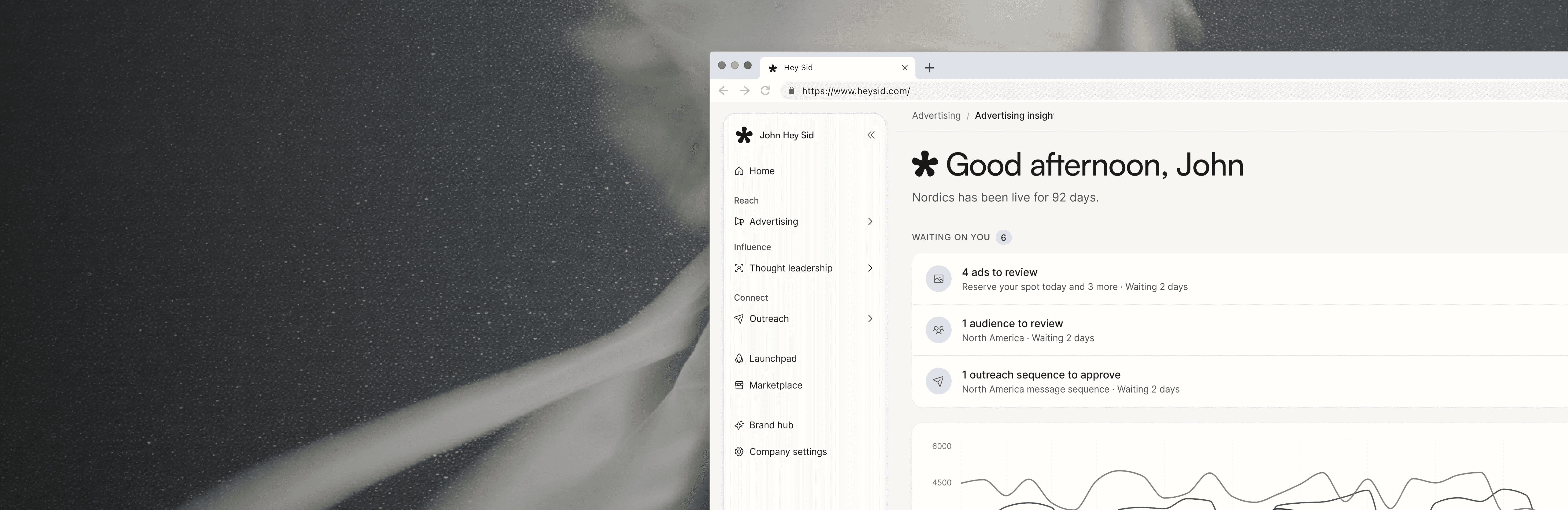
Hey Sid addresses a related but distinct problem: building familiarity with decision-makers through person-level advertising and LinkedIn outreach before sequences begin, as described on heysid.com/how-it-works. See the full platform comparison for a side-by-side breakdown.
How a Sales Engagement Platform Differs from Manual Outreach
Without a sales engagement platform | With a sales engagement platform | Impact |
Reps manage outreach manually across spreadsheets and email | Sequences run automatically with personalisation and follow-up logic | More time spent on conversations, less on admin |
Inconsistent follow-up — prospects fall through the cracks | Every prospect receives the agreed number of touchpoints on schedule | Higher contact rates, fewer lost opportunities |
No visibility into which messages perform | Email open rates (where available), reply rates, and conversion tracked per sequence step | Teams iterate messaging based on data, not instinct |
Activity data scattered across rep inboxes | All activity synced to CRM automatically | Managers see pipeline health without chasing reps for updates |
New reps reinvent the wheel on messaging | Approved templates and sequences used consistently | Faster ramp time, consistent quality across the team |
Which B2B Teams Need a Sales Engagement Platform?
Team situation | The problem without a SEP | What a SEP solves |
SDR team with 10+ reps | Manual outreach is inconsistent. Top reps follow up 7 times; others give up after 2. | Forces a consistent process across every rep — same number of touchpoints, same timing, same quality. |
Sales cycle of 6+ months | Prospects disengage between touchpoints when follow-up is infrequent or ad hoc. | Keeps the account warm with structured, multi-channel sequences over a long buying period. |
Marketing and sales misaligned | Marketing generates leads; sales cannot track which campaigns drove the most engaged prospects. | Activity data synced to CRM gives marketing visibility into which leads convert and how quickly. |
New rep onboarding | New hires take 3-6 months to ramp. Messaging quality varies until reps build their own templates. | Proven sequences and templates are ready on day one. Ramp time shortens measurably. |
RevOps needs forecast visibility | Sales managers cannot see pipeline activity without chasing reps individually. | All activity logged automatically. Managers see sequence coverage, reply rates, and meeting rates in one dashboard. |
When a Sales Engagement Platform Is Not Enough
A sequencing tool handles execution: it automates the outreach once a rep decides to contact a prospect. It does not solve upstream problems.
For B2B companies with long, multi-stakeholder sales cycles, cold sequences can produce lower conversion rates regardless of how well the sequence is structured. The problem is not execution — it is that prospects have no familiarity with the brand before the first message arrives.
This is where account-warming works alongside sequencing. Running person-level advertising and thought leadership content targeting the same decision-makers for 60-90 days before outreach begins means prospects recognise the brand when outreach lands. Hey Sid is built for this motion. See how it works.
For a full explanation of how sales engagement platforms fit into the broader B2B revenue stack, see B2B Demand Generation: The Complete Guide and ABM Pipeline Acceleration: 7 Tactics to Shorten Your B2B Sales Cycle.
How Much Does a Sales Engagement Platform Cost?
Pricing varies significantly by vendor, plan, and team size. Apollo.io publicly lists pricing tiers on its website; check apollo.io/pricing for current figures as these change frequently. Salesloft pricing is custom and not publicly listed; third-party estimates vary widely depending on tier and contract. Hey Sid operates on a managed service model starting at approximately 20,000 SEK/month in ad spend.
For a full pricing breakdown across all major platforms, see Sales Engagement Platform Pricing in 2026
FAQ
What is the difference between a sales engagement platform and a CRM?
A CRM stores customer and deal data. A sales engagement platform automates and tracks outreach activity. The two work together: the SEP logs all touchpoints into the CRM so the full account history is always up to date. Many SEPs integrate with major CRMs such as HubSpot, Salesforce, and Microsoft Dynamics, though integration depth and bi-directional sync capabilities vary by product and plan.
Do I need a sales engagement platform if my team is small?
A team of 3-5 reps can manage outreach manually if the volume is low. The inflection point tends to be when manual outreach becomes inconsistent across the team, or when managers can no longer get pipeline visibility without chasing reps individually. At that stage, a dedicated platform typically pays for itself through better follow-up consistency and reporting.
Is a sales engagement platform the same as marketing automation?
No. Marketing automation platforms such as HubSpot, Marketo, and Pardot manages email campaigns to large lists, nurture flows, and lead scoring. A sales engagement platform manages 1-to-1 outreach sequences from individual reps to individual prospects. Both use email, but the intent, personalisation level, and recipient scale are different.
Can a sales engagement platform work without a CRM?
Technically yes, but the value drops significantly without CRM integration. The main benefit of a sales engagement platform for managers is automatic activity logging that gives pipeline visibility without manual data entry. Without a CRM to sync into, that data stays siloed in the platform.
Does Hey Sid replace a sales engagement platform?
No. Hey Sid solves account warming: building familiarity with decision-makers through person-level advertising and LinkedIn outreach before sequences begin. It works alongside sequencing tools, not instead of them. Teams running 12-36 month B2B sales cycles use Hey Sid to warm accounts and a sequencing tool to execute outreach against those warmed accounts.
Sources
Related: Best Sales Engagement Platforms for B2B in 2026 | Sales Engagement Platform vs CRM | B2B Demand Generation: The Complete Guide